Buy endoprothetik.eu ?
We are moving the project
endoprothetik.eu .
Are you interested in purchasing the domain
endoprothetik.eu ?
domain@kv-gmbh.de · 0541-91531010
Buy endoprothetik.eu ?
What is a temporal clause?
A temporal clause is a type of subordinate clause that provides information about when an action takes place in relation to the main clause. It usually includes a time-related word or phrase, such as "when," "while," "after," "before," or "since." Temporal clauses help to clarify the timing of events in a sentence and are commonly used in complex sentences to show the sequence of actions. **
What is the temporal context?
The temporal context refers to the time period or timeframe in which an event, situation, or piece of information occurs or is relevant. It helps to provide a framework for understanding the sequence of events and the historical or current significance of a particular topic. Understanding the temporal context is important for interpreting and analyzing information accurately within its historical or current timeframe. **


Similar search terms for Temporal
Top-Angebote
Products related to Temporal:
-
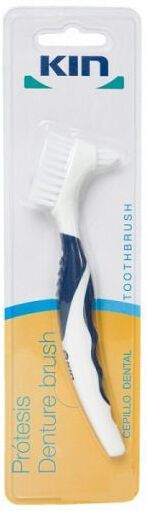
Oradent Dental Prosthesis BrushHealth and Beauty Oral Care Oradent Dental Prosthesis Brush Oradent F Dental Prosthesis Brush Oradent F Dental Prosthesis Brush is a brush specially designed for cleaning dental prostheses, such as dentures, bridges and other orthodontic devices. With soft and flexible bristles, this brush effectively removes food debris, bacteria and plaque accumulated on the prosthesis, ensuring complete oral hygiene and protecting the health of your gums and natural teeth. Its ergonomic design and compact size make it easy to use, ideal for keeping your dentures in perfect condition. Benefits of Oradent F Dental Prosthesis Brush Effective and gentle cleaning: The soft bristles of the Oradent F Denture Brush remove food debris and plaque without damaging the surface of the denture. Infection Prevention: Using this brush regularly helps prevent the buildup of bacteria and fungi, which can cause bad breath or mouth infections. Ergonomic design: Its ergonomic handle makes it easier to grip and use the brush, allowing for more comfortable and precise cleaning. Easy access to difficult areas: The bristles are arranged in a way that allows easy access to the corners and surfaces of the prosthesis, ensuring complete cleaning. Compatibility with all types of prosthetics: Ideal for dentures, bridges and other orthodontic devices, ensuring that any type of prosthesis remains clean and free of debris. Who is Oradent F Denture Brush for? Oradent F Denture Brush is specially designed for people who wear dental prostheses, such as dentures, bridges or implants. It is perfect for those who need to keep their prosthesis clean and free of bacteria on a daily basis. In addition, it is ideal for people with sensitive gums or who wear dentures for a long time, as its soft bristles protect the health of the gums and do not damage the dentures. If you are looking for a brush that offers a gentle but effective cleaning for your dentures, this is the right product. How do I apply it? Using the Oradent F Denture Brush is simple. Here's how to get the most out of it: Wet the brush: Before using the brush, wet the bristles with warm water. This will help soften food residue and make cleaning easier. Apply some toothpaste: Place a small amount of toothpaste on the bristles of the toothbrush. It is recommended to use a toothpaste suitable for dentures. Clean your denture: Gently brush the surfaces of the denture, making sure to clean all areas, including the edges and corners. Use gentle strokes to avoid damaging the denture. Rinse well: After brushing, rinse your dentures with warm water to remove any toothpaste residue or food debris. Use the brush daily: Use this brush as part of your daily cleaning routine to keep your dentures in good condition and prevent bacteria buildup. Product Usage Oradent F Denture Brush should be used regularly as part of daily oral hygiene. Its proper use ensures that your denture remains clean and free of food debris, plaque and bacteria, preventing...5,39 £*Shipping: 3,99 £Secure redirect to the provider
-
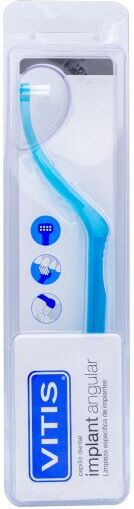
Vitis Angular Implant BrushHealth and Beauty Oral Care Vitis Angular Implant Brush VITIS Implant Angular is a brush with a small head designed to access complex hygiene areas that exist around implants and prostheses. The neck of the handle is narrow and angled to provide easy access to the inner (lingual) surface of the anterior and posterior aspects of the mouth. In addition, the brush adapts anatomically to the shape of the face, also allowing access to the external (vestibular) face. Its filaments are soft to guarantee the elimination of oral biofilm (bacterial plaque) and the protection of the oral cavity. The handle of the brush is anatomical and has non-slip grooves for easy use. Available in two colors: transparent and blue. Indications: VITIS Implant Angular, thanks to the angular shape of the neck of the handle, is especially indicated to guarantee correct hygiene in areas that are difficult to access such as the surroundings of implants and prostheses. Its use is also recommended in the posterior areas since the brush adapts anatomically to the shape of the oral cavity. How to use: Brush your teeth three times a day (after each meal) with circular movements from gum to tooth.5,94 £*Shipping: 3,99 £Secure redirect to the provider
-
TePe Implant Orthodontic ToothbrushHealth and Beauty Oral Care TePe Implant Orthodontic Toothbrush What is Tepe Implant Orthodontic Toothbrush? The Tepe Implant Orthodontic Toothbrush is a brush specially designed to provide effective cleaning around dental implants and orthodontic appliances. With its soft, carefully arranged bristles, this brush ensures superior oral hygiene, helping to maintain healthy gums and prevent plaque buildup in hard-to-reach areas. Benefits Using the Tepe Implant Orthodontic Toothbrush offers multiple benefits, including: Precise cleaning: Thin, flexible bristles allow for effective cleaning around brackets, wires and other orthodontic appliances. Implant Protection: Designed to gently clean around dental implants, helping to prevent infection and maintain gum health. Ergonomics: Its ergonomic design facilitates handling and access to hard-to-reach areas in the mouth. Softness: Soft bristles are gentle on gums and teeth, avoiding irritation and damage. Durability: Made with high quality materials that ensure a long life of the brush. For whom it is? The Tepe Implant Orthodontic Toothbrush is aimed at people who wear orthodontic appliances or have dental implants. It is ideal for those looking to maintain optimal oral hygiene and need a specific tool to effectively clean around their implants and appliances. It is also suitable for anyone who wants a toothbrush that offers precise and gentle cleaning in hard-to-reach areas. How do I apply it? To use the Tepe Implant Orthodontic Toothbrush , follow these simple steps: Place a small amount of toothpaste on the bristles of the brush. Gently insert the brush into the area around the implant or brace. Use gentle, circular motions to effectively clean the surfaces around the implant or appliance. Rinse your mouth and brush thoroughly after use. Repeat the process twice a day to maintain optimal oral hygiene. Product use The Tepe Implant Orthodontic Toothbrush is easy to use and can be incorporated into your daily oral care routine. We recommend using it after each meal and before bed to ensure a complete and effective cleanse. Thanks to its specialized design, this brush is ideal to complement regular brushing, offering a comprehensive solution to maintain a healthy and clean mouth. Buy Tepe Implant Orthodontic Toothbrush today and experience the difference in your oral hygiene. With this brush, you can be sure that you are providing the best possible care for your implants and orthodontic appliances.2,14 £*Shipping: 3,99 £Secure redirect to the provider


-
What does the term "temporal error" mean?
Temporal error refers to a mistake or discrepancy that occurs in relation to time. It can occur when there is a mismatch between the timing of events or actions, leading to inaccuracies or inconsistencies in the temporal sequence. In computing, temporal errors can occur when there are issues with the timing or synchronization of processes, resulting in incorrect outcomes or behaviors. Identifying and addressing temporal errors is important to ensure the accuracy and reliability of systems and processes. **
-
How are temporal clauses formed in Latin?
Temporal clauses in Latin are formed using subordinating conjunctions such as "cum" (when), "postquam" (after), "dum" (while), and "antequam" (before). These conjunctions are followed by a verb in the subjunctive mood to indicate that the action of the temporal clause is dependent on the action of the main clause. For example, "cum veniat" means "when he/she comes" and "postquam viderit" means "after he/she sees." These temporal clauses are used to express the time relationship between two actions or events. **
-
Is there actually a temporal version of homesickness?
Yes, there is a temporal version of homesickness known as "time-sickness." Time-sickness is the feeling of longing for a specific time period in the past, such as childhood or a significant moment in one's life. It can be triggered by nostalgia or a desire to relive happy memories from the past. Time-sickness can lead to feelings of sadness, yearning, and a sense of disconnection from the present moment. **
-
How do you form temporal clauses in French?
Temporal clauses in French are formed using subordinating conjunctions such as "quand" (when), "pendant que" (while), "dès que" (as soon as), "avant que" (before), "après que" (after), etc. These subordinating conjunctions are followed by a subject and a verb in the subjunctive mood if the action in the temporal clause has not yet occurred, or in the indicative mood if the action has already taken place. Temporal clauses are used to indicate the timing or sequence of events in relation to the main clause. **
Can there be simultaneous spatial and temporal summation?
Yes, simultaneous spatial and temporal summation can occur. Spatial summation refers to the combination of signals from different locations on a neuron's dendrites, while temporal summation involves the combination of signals arriving at different times. Both types of summation can occur simultaneously, with multiple signals from different locations and at different times converging to trigger an action potential in a neuron. This allows for the integration of spatially and temporally distributed inputs to generate a coordinated response. **
What are the temporal prepositions for "in" and "nach"?
The temporal preposition for "in" is typically used for future time expressions, such as "in einer Woche" (in a week) or "in zwei Monaten" (in two months). On the other hand, the temporal preposition for "nach" is used for time expressions that refer to events happening after a certain point in time, such as "nach dem Abendessen" (after dinner) or "nach der Schule" (after school). **
Top-Angebote
Products related to Temporal:
-
Uplifted Finds Retro Macintosh Aesthetic Clock & Technical Temporal Desktop Logic Retro Macintosh Aesthetic Clock & Technical Temporal Desktop LogicInaugurate a powerful ChronosSanctuary energy for your digital environment with the ultimate 2026 boutiqueintegrated temporal solution. The Retro Macintosh Aesthetic Clock is the premier choice for creating a TechnicalModern or StudioLuxe atmosphere...212,97 $*Shipping: 0,00 $Secure redirect to the provider
-
Gum Prosthesis ToothbrushHealth and Beauty Oral Care Gum Prosthesis Toothbrush GUM denture brush is ideal for those who have dentures. This special firm nylon design has flat filaments and a tapered shape. So it is perfect for effectively cleaning the surfaces of the prosthesis and small areas that are difficult to access. If you wear a prosthesis, you will know that it is not always easy to clean it properly, and sometimes a conventional brush does not achieve the desired effect. Dentures, like natural teeth, need proper care as they can be a source of bacteria build-up if they are not kept clean. Its comfortable angled handle with soft grip provides better control while brushing.8,86 £*Shipping: 3,99 £Secure redirect to the provider
-
Oradent Dental Prosthesis BrushHealth and Beauty Oral Care Oradent Dental Prosthesis Brush Oradent F Dental Prosthesis Brush Oradent F Dental Prosthesis Brush is a brush specially designed for cleaning dental prostheses, such as dentures, bridges and other orthodontic devices. With soft and flexible bristles, this brush effectively removes food debris, bacteria and plaque accumulated on the prosthesis, ensuring complete oral hygiene and protecting the health of your gums and natural teeth. Its ergonomic design and compact size make it easy to use, ideal for keeping your dentures in perfect condition. Benefits of Oradent F Dental Prosthesis Brush Effective and gentle cleaning: The soft bristles of the Oradent F Denture Brush remove food debris and plaque without damaging the surface of the denture. Infection Prevention: Using this brush regularly helps prevent the buildup of bacteria and fungi, which can cause bad breath or mouth infections. Ergonomic design: Its ergonomic handle makes it easier to grip and use the brush, allowing for more comfortable and precise cleaning. Easy access to difficult areas: The bristles are arranged in a way that allows easy access to the corners and surfaces of the prosthesis, ensuring complete cleaning. Compatibility with all types of prosthetics: Ideal for dentures, bridges and other orthodontic devices, ensuring that any type of prosthesis remains clean and free of debris. Who is Oradent F Denture Brush for? Oradent F Denture Brush is specially designed for people who wear dental prostheses, such as dentures, bridges or implants. It is perfect for those who need to keep their prosthesis clean and free of bacteria on a daily basis. In addition, it is ideal for people with sensitive gums or who wear dentures for a long time, as its soft bristles protect the health of the gums and do not damage the dentures. If you are looking for a brush that offers a gentle but effective cleaning for your dentures, this is the right product. How do I apply it? Using the Oradent F Denture Brush is simple. Here's how to get the most out of it: Wet the brush: Before using the brush, wet the bristles with warm water. This will help soften food residue and make cleaning easier. Apply some toothpaste: Place a small amount of toothpaste on the bristles of the toothbrush. It is recommended to use a toothpaste suitable for dentures. Clean your denture: Gently brush the surfaces of the denture, making sure to clean all areas, including the edges and corners. Use gentle strokes to avoid damaging the denture. Rinse well: After brushing, rinse your dentures with warm water to remove any toothpaste residue or food debris. Use the brush daily: Use this brush as part of your daily cleaning routine to keep your dentures in good condition and prevent bacteria buildup. Product Usage Oradent F Denture Brush should be used regularly as part of daily oral hygiene. Its proper use ensures that your denture remains clean and free of food debris, plaque and bacteria, preventing...5,39 £*Shipping: 3,99 £Secure redirect to the provider
-
What is a temporal clause?
A temporal clause is a type of subordinate clause that provides information about when an action takes place in relation to the main clause. It usually includes a time-related word or phrase, such as "when," "while," "after," "before," or "since." Temporal clauses help to clarify the timing of events in a sentence and are commonly used in complex sentences to show the sequence of actions. **
-
What is the temporal context?
The temporal context refers to the time period or timeframe in which an event, situation, or piece of information occurs or is relevant. It helps to provide a framework for understanding the sequence of events and the historical or current significance of a particular topic. Understanding the temporal context is important for interpreting and analyzing information accurately within its historical or current timeframe. **
-
What does the term "temporal error" mean?
Temporal error refers to a mistake or discrepancy that occurs in relation to time. It can occur when there is a mismatch between the timing of events or actions, leading to inaccuracies or inconsistencies in the temporal sequence. In computing, temporal errors can occur when there are issues with the timing or synchronization of processes, resulting in incorrect outcomes or behaviors. Identifying and addressing temporal errors is important to ensure the accuracy and reliability of systems and processes. **
-
How are temporal clauses formed in Latin?
Temporal clauses in Latin are formed using subordinating conjunctions such as "cum" (when), "postquam" (after), "dum" (while), and "antequam" (before). These conjunctions are followed by a verb in the subjunctive mood to indicate that the action of the temporal clause is dependent on the action of the main clause. For example, "cum veniat" means "when he/she comes" and "postquam viderit" means "after he/she sees." These temporal clauses are used to express the time relationship between two actions or events. **
Similar search terms for Temporal
-
Vitis Angular Implant BrushHealth and Beauty Oral Care Vitis Angular Implant Brush VITIS Implant Angular is a brush with a small head designed to access complex hygiene areas that exist around implants and prostheses. The neck of the handle is narrow and angled to provide easy access to the inner (lingual) surface of the anterior and posterior aspects of the mouth. In addition, the brush adapts anatomically to the shape of the face, also allowing access to the external (vestibular) face. Its filaments are soft to guarantee the elimination of oral biofilm (bacterial plaque) and the protection of the oral cavity. The handle of the brush is anatomical and has non-slip grooves for easy use. Available in two colors: transparent and blue. Indications: VITIS Implant Angular, thanks to the angular shape of the neck of the handle, is especially indicated to guarantee correct hygiene in areas that are difficult to access such as the surroundings of implants and prostheses. Its use is also recommended in the posterior areas since the brush adapts anatomically to the shape of the oral cavity. How to use: Brush your teeth three times a day (after each meal) with circular movements from gum to tooth.5,94 £*Shipping: 3,99 £Secure redirect to the provider
-
TePe Implant Orthodontic ToothbrushHealth and Beauty Oral Care TePe Implant Orthodontic Toothbrush What is Tepe Implant Orthodontic Toothbrush? The Tepe Implant Orthodontic Toothbrush is a brush specially designed to provide effective cleaning around dental implants and orthodontic appliances. With its soft, carefully arranged bristles, this brush ensures superior oral hygiene, helping to maintain healthy gums and prevent plaque buildup in hard-to-reach areas. Benefits Using the Tepe Implant Orthodontic Toothbrush offers multiple benefits, including: Precise cleaning: Thin, flexible bristles allow for effective cleaning around brackets, wires and other orthodontic appliances. Implant Protection: Designed to gently clean around dental implants, helping to prevent infection and maintain gum health. Ergonomics: Its ergonomic design facilitates handling and access to hard-to-reach areas in the mouth. Softness: Soft bristles are gentle on gums and teeth, avoiding irritation and damage. Durability: Made with high quality materials that ensure a long life of the brush. For whom it is? The Tepe Implant Orthodontic Toothbrush is aimed at people who wear orthodontic appliances or have dental implants. It is ideal for those looking to maintain optimal oral hygiene and need a specific tool to effectively clean around their implants and appliances. It is also suitable for anyone who wants a toothbrush that offers precise and gentle cleaning in hard-to-reach areas. How do I apply it? To use the Tepe Implant Orthodontic Toothbrush , follow these simple steps: Place a small amount of toothpaste on the bristles of the brush. Gently insert the brush into the area around the implant or brace. Use gentle, circular motions to effectively clean the surfaces around the implant or appliance. Rinse your mouth and brush thoroughly after use. Repeat the process twice a day to maintain optimal oral hygiene. Product use The Tepe Implant Orthodontic Toothbrush is easy to use and can be incorporated into your daily oral care routine. We recommend using it after each meal and before bed to ensure a complete and effective cleanse. Thanks to its specialized design, this brush is ideal to complement regular brushing, offering a comprehensive solution to maintain a healthy and clean mouth. Buy Tepe Implant Orthodontic Toothbrush today and experience the difference in your oral hygiene. With this brush, you can be sure that you are providing the best possible care for your implants and orthodontic appliances.2,14 £*Shipping: 3,99 £Secure redirect to the provider
-
TePe Implant Care ToothbrushHealth and Beauty Oral Care TePe Implant Care Toothbrush Recommended for cleaning removable dentures. Long and strong filaments guarantee good accessibility. The toothbrush head can be bent back to improve grip and accessibility. Designed to look like a normal toothbrush, without damaging the denture. Instructions for use: Heat the neck of the toothbrush under hot water.\ Bend the head back until you achieve the desired angle for the best cleaning comfort of the denture.\ Rub the inside and outside of the denture until It is clean and there is no food leftover.2,60 £*Shipping: 3,99 £Secure redirect to the provider
-
Is there actually a temporal version of homesickness?
Yes, there is a temporal version of homesickness known as "time-sickness." Time-sickness is the feeling of longing for a specific time period in the past, such as childhood or a significant moment in one's life. It can be triggered by nostalgia or a desire to relive happy memories from the past. Time-sickness can lead to feelings of sadness, yearning, and a sense of disconnection from the present moment. **
-
How do you form temporal clauses in French?
Temporal clauses in French are formed using subordinating conjunctions such as "quand" (when), "pendant que" (while), "dès que" (as soon as), "avant que" (before), "après que" (after), etc. These subordinating conjunctions are followed by a subject and a verb in the subjunctive mood if the action in the temporal clause has not yet occurred, or in the indicative mood if the action has already taken place. Temporal clauses are used to indicate the timing or sequence of events in relation to the main clause. **
-
Can there be simultaneous spatial and temporal summation?
Yes, simultaneous spatial and temporal summation can occur. Spatial summation refers to the combination of signals from different locations on a neuron's dendrites, while temporal summation involves the combination of signals arriving at different times. Both types of summation can occur simultaneously, with multiple signals from different locations and at different times converging to trigger an action potential in a neuron. This allows for the integration of spatially and temporally distributed inputs to generate a coordinated response. **
-
What are the temporal prepositions for "in" and "nach"?
The temporal preposition for "in" is typically used for future time expressions, such as "in einer Woche" (in a week) or "in zwei Monaten" (in two months). On the other hand, the temporal preposition for "nach" is used for time expressions that refer to events happening after a certain point in time, such as "nach dem Abendessen" (after dinner) or "nach der Schule" (after school). **
* All prices are inclusive of VAT and, if applicable, plus shipping costs. The offer information is based on the details provided by the respective shop and is updated through automated processes. Real-time updates do not occur, so deviations can occur in individual cases. ** Note: Parts of this content were created by AI.